

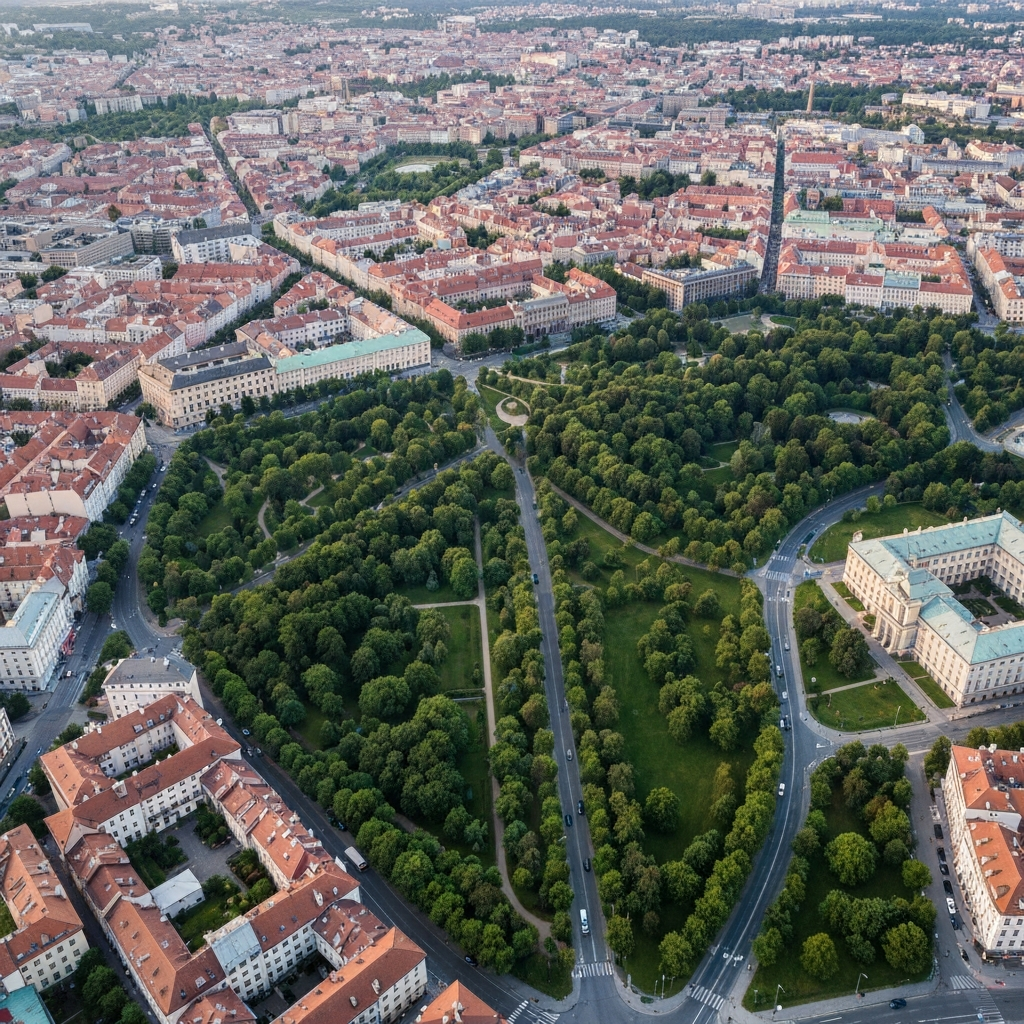
Prague, like many metropolitan areas, experiences the urban heat island (UHI) effect, where urban regions register higher temperatures than their rural surroundings. This phenomenon arises from factors such as extensive concrete and asphalt surfaces, limited vegetation, and heat generated by human activities.
Causes of the Urban Heat Island Effect
The UHI effect in Prague is primarily due to:
- Surface Materials: Urban materials like concrete and asphalt absorb and retain heat more than natural landscapes, leading to elevated temperatures.
- Reduced Vegetation: Limited green spaces decrease the cooling effects of shade and evapotranspiration.
- Human Activities: Energy consumption from vehicles, air conditioning, and industrial processes contributes additional heat.
Impacts on Prague
The UHI effect in Prague has several implications:
- Increased Temperatures: Urban areas can be significantly warmer than surrounding rural regions, especially during summer months.
- Health Risks: Elevated temperatures can exacerbate heat-related illnesses, particularly among vulnerable populations.
- Environmental Stress: Higher temperatures can strain local ecosystems and water resources.
Mitigation Efforts
To combat the UHI effect, Prague has implemented various strategies:
- Green Spaces: The city has invested over 570 million crowns in projects like tree planting, creation of flower meadows, and revitalization of courtyards to increase vegetation cover.
- Climate-Resilient Trees: Initiatives such as the “Climate Trees for Prague” program test heat- and drought-resistant tree species, with plans to plant up to 900 adapted trees along city streets.
- Cooling Maps: Development of maps indicating “cooling oases” helps residents locate areas with water, shade, and cooling during hot days.
These efforts aim to reduce the UHI effect and enhance the city’s resilience to climate change.