

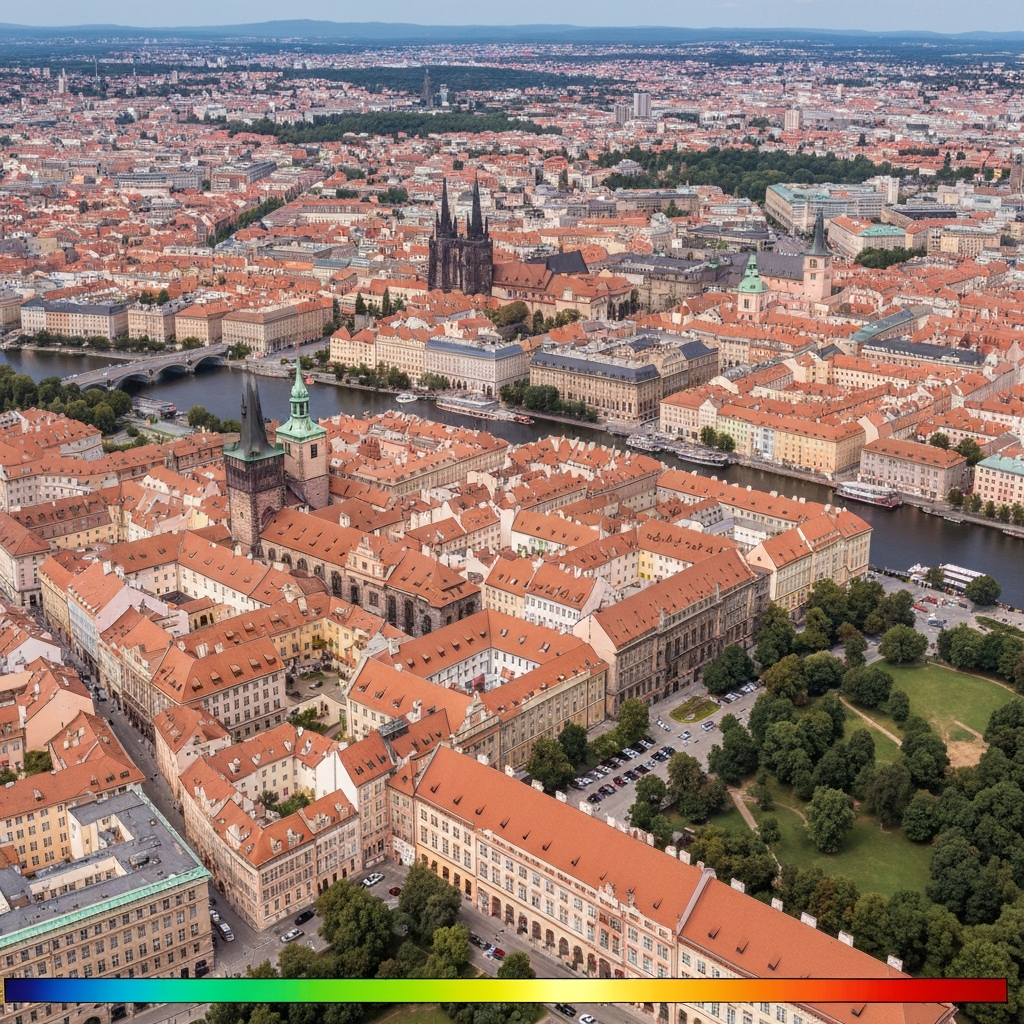
Prague, like many urban centers worldwide, experiences the urban heat island (UHI) effect—a phenomenon where city areas are significantly warmer than their rural surroundings. This temperature disparity arises from factors such as extensive concrete and asphalt surfaces, limited vegetation, and heat generated by human activities.
Causes of the Urban Heat Island Effect
The primary contributors to the UHI effect in Prague include:
- Land Surface Modification: Urban materials like concrete and asphalt absorb and retain heat more than natural landscapes, leading to higher surface temperatures.
- Reduced Vegetation: Limited green spaces decrease the cooling effects of shade and evapotranspiration, exacerbating heat accumulation.
- Waste Heat Emissions: Energy consumption from vehicles, air conditioning, and industrial activities releases additional heat into the urban environment.
Impacts on Prague
The UHI effect in Prague has several notable consequences:
- Increased Temperatures: Studies indicate that Prague has experienced a warming trend of approximately 2.9°C over the past 249 years, with the UHI effect contributing significantly to this rise.
- Health Risks: Elevated temperatures can lead to heat-related illnesses, particularly among vulnerable populations such as the elderly and those with pre-existing health conditions.
- Environmental Stress: Higher temperatures can strain local ecosystems, affecting biodiversity and water resources.
Mitigation Efforts
To combat the UHI effect, Prague has implemented several strategies:
- Climate Adaptation Projects: In 2025, the city invested over 23 million crowns in projects addressing heat, drought, and heavy rainfall, with more than 570 million crowns allocated since the program’s inception.
- Enhancing Green Spaces: Increasing urban greenery through parks, green roofs, and tree planting initiatives helps cool the city by providing shade and promoting evapotranspiration.
- Reflective Materials: Utilizing lighter-colored and reflective building materials reduces heat absorption, mitigating temperature increases.
Community Involvement
Residents can also contribute to mitigating the UHI effect by:
- Planting trees and maintaining gardens to increase local vegetation.
- Using energy-efficient appliances to reduce waste heat emissions.
- Advocating for sustainable urban planning and supporting local green initiatives.
Understanding and addressing the urban heat island effect is crucial for enhancing Prague’s livability and resilience in the face of climate change. Through combined efforts from the city and its residents, Prague can work towards a cooler and more sustainable urban environment.