

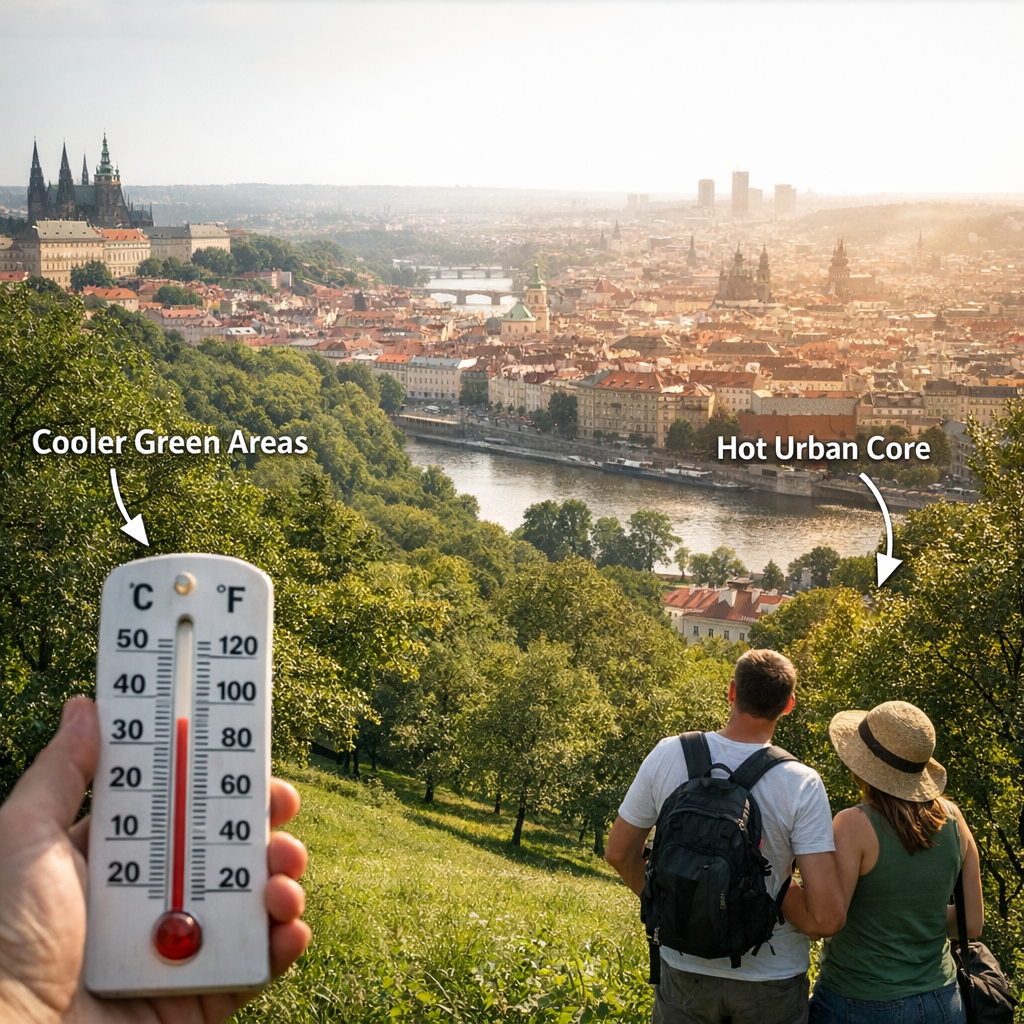
Prague, like many metropolitan areas, experiences the urban heat island (UHI) effect, where urban regions become significantly warmer than their rural surroundings. This phenomenon arises from factors such as the extensive use of heat-absorbing materials like concrete and asphalt, reduced vegetation, and waste heat from human activities.
Causes of the Urban Heat Island Effect
The UHI effect in Prague is primarily driven by:
- Land Surface Modification: Urban development replaces natural landscapes with materials that absorb and retain heat, leading to higher surface temperatures.
- Reduced Vegetation: Limited green spaces decrease the cooling effects of shade and evapotranspiration.
- Waste Heat Emissions: Energy consumption from vehicles, air conditioning, and industrial activities contributes additional heat to the urban environment.
Impacts on Prague
The consequences of the UHI effect in Prague include:
- Increased Temperatures: Urban areas can be several degrees warmer than surrounding rural regions, especially during the night.
- Health Risks: Elevated temperatures can exacerbate heat-related illnesses, particularly among vulnerable populations.
- Energy Consumption: Higher temperatures lead to increased use of air conditioning, resulting in greater energy demand and associated costs.
Mitigation Efforts
To combat the UHI effect, Prague has implemented several strategies:
- Green Spaces: The city has invested over 570 million crowns in projects focusing on heat protection, water management, and the expansion of green areas. In 2025 alone, 15 projects across 13 districts were supported to address heat, drought, and heavy rainfall.
- Climate Adaptation Strategy: Prague’s Climate Adaptation Strategy 2025–2029 outlines measures to prepare the city for heatwaves, dry periods, and heavy rainfall, with significant investments in district-level climate adaptation projects.
Looking Ahead
Addressing the urban heat island effect is crucial for enhancing Prague’s resilience to climate change. Continued investment in green infrastructure, sustainable urban planning, and public awareness will play vital roles in mitigating the UHI effect and ensuring a livable environment for all residents.