

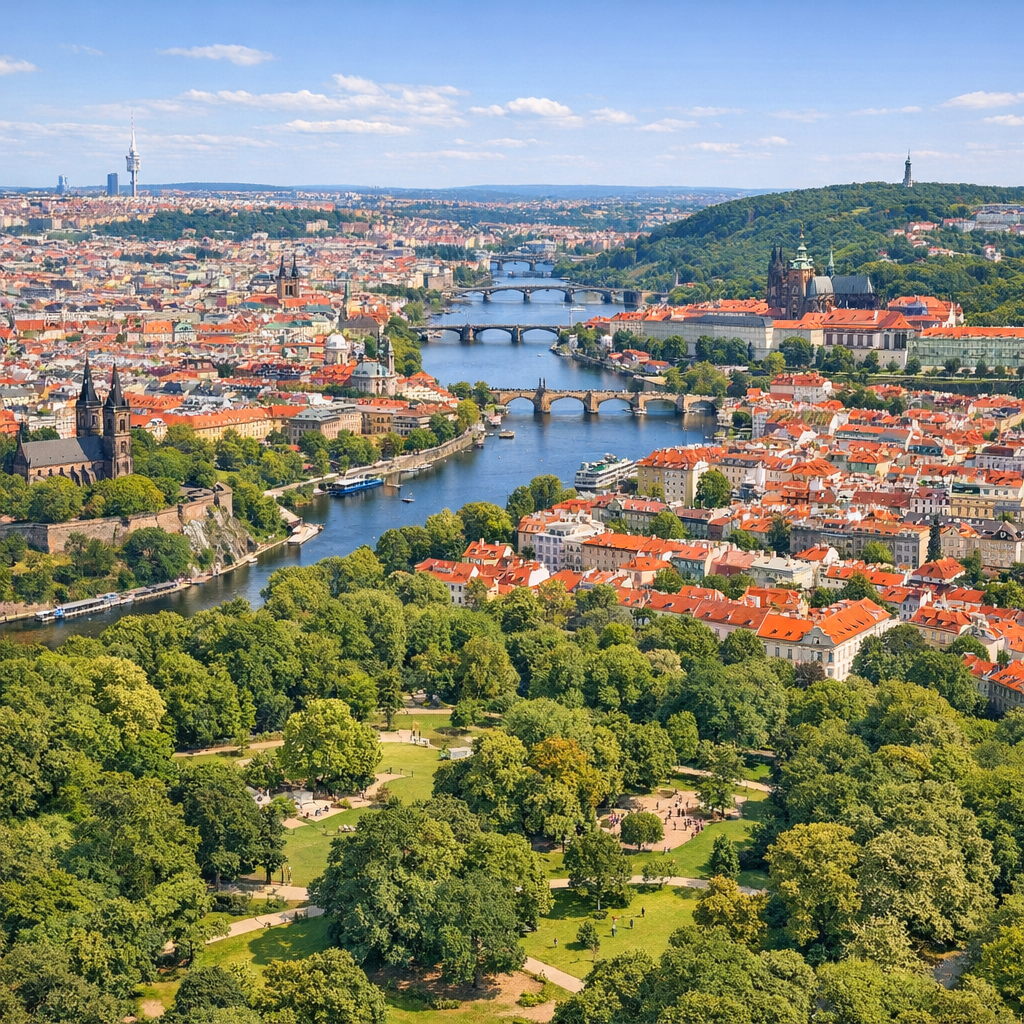
Prague, like many metropolitan areas, experiences the urban heat island (UHI) effect, where urban regions register higher temperatures than their rural surroundings. This phenomenon arises from factors such as extensive concrete and asphalt surfaces, limited vegetation, and heat emissions from human activities.
Causes of the Urban Heat Island Effect
The UHI effect is primarily driven by:
- Surface Materials: Urban materials like concrete and asphalt absorb and retain heat more than natural landscapes, leading to elevated temperatures.
- Reduced Vegetation: Limited green spaces decrease shade and evapotranspiration, processes that naturally cool the environment.
- Human Activities: Energy consumption from vehicles, air conditioning, and industrial processes releases additional heat into the urban atmosphere.
Impact on Prague
In Prague, the UHI effect has led to noticeable temperature increases. Data indicates that from 1776 to 2025, the city’s average temperature rose by approximately 2.9°C. This warming trend is consistent with global patterns and underscores the significance of urbanization on local climates.
Mitigation Efforts
To combat the UHI effect, Prague has implemented several initiatives:
- Climate Adaptation Strategy: The city has adopted a comprehensive plan focusing on enhancing green spaces, improving water management, and increasing urban greenery to mitigate heat.
- Adaptation Fund Projects: In 2025, Prague invested over 23 million crowns in district-level projects, including tree planting, creation of flower meadows, and revitalization of courtyards to enhance urban cooling.
- Climate Trees for Prague Program: This initiative tests heat- and drought-resistant tree species, with plans to plant up to 900 climate-adapted trees along the city’s streets.
Looking Ahead
Addressing the UHI effect requires ongoing efforts in urban planning and community engagement. Residents can contribute by supporting local greening projects, advocating for sustainable development, and adopting practices that reduce heat emissions. Through collective action, Prague can enhance its resilience against rising urban temperatures and improve the quality of life for its inhabitants.