

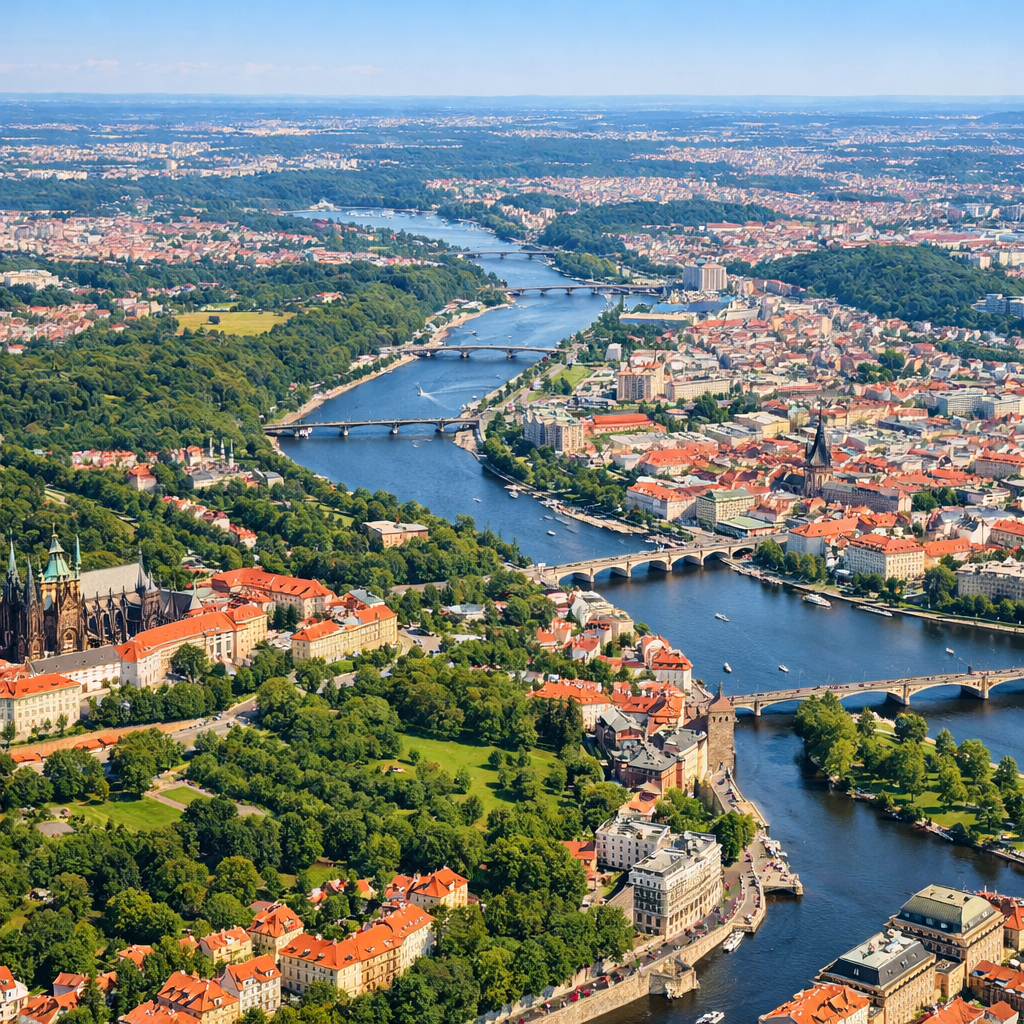
As global temperatures continue to rise, urban areas like Prague are experiencing intensified heat due to the urban heat island (UHI) effect. This phenomenon occurs when city landscapes, dominated by concrete and asphalt, absorb and retain heat, making urban centers significantly warmer than their rural surroundings.
Understanding the Urban Heat Island Effect
The UHI effect is primarily caused by the replacement of natural land cover with dense concentrations of pavement, buildings, and other surfaces that absorb and retain heat. Factors contributing to this effect include:
- Reduced Vegetation: Limited green spaces decrease shade and evapotranspiration, processes that naturally cool the environment.
- Heat-Absorbing Materials: Urban materials like concrete and asphalt have high thermal mass, absorbing heat during the day and releasing it at night.
- Urban Geometry: Narrow streets and tall buildings can trap heat, reducing airflow and increasing temperatures.
In Prague, these factors have led to noticeable temperature differences between the city center and its outskirts, especially during heatwaves.
Prague’s Initiatives to Mitigate UHI
Recognizing the challenges posed by the UHI effect, Prague has implemented several measures to adapt to and mitigate rising urban temperatures:
- Climate Adaptation Strategy: The city has adopted a comprehensive plan focusing on increasing green spaces, enhancing water management, and improving urban design to reduce heat retention.
- Green Infrastructure Projects: Initiatives include planting heat- and drought-resistant tree species, creating new parks, and revitalizing existing green areas to provide natural cooling.
- Water Management Improvements: Efforts to manage rainwater more effectively help cool the city and reduce the heat island effect.
These projects aim to create a more resilient urban environment capable of withstanding the impacts of climate change.
How Residents Can Help
While city-wide initiatives are crucial, individual actions also play a significant role in mitigating the UHI effect. Residents can contribute by:
- Planting Trees and Gardens: Increasing vegetation around homes can provide shade and reduce local temperatures.
- Using Reflective Materials: Opting for light-colored roofing and paving materials can reflect more sunlight and absorb less heat.
- Supporting Green Spaces: Participating in community efforts to maintain and expand parks and gardens enhances the city’s overall greenery.
By combining municipal initiatives with community engagement, Prague can effectively address the challenges posed by the urban heat island effect, ensuring a cooler and more sustainable environment for all residents.