

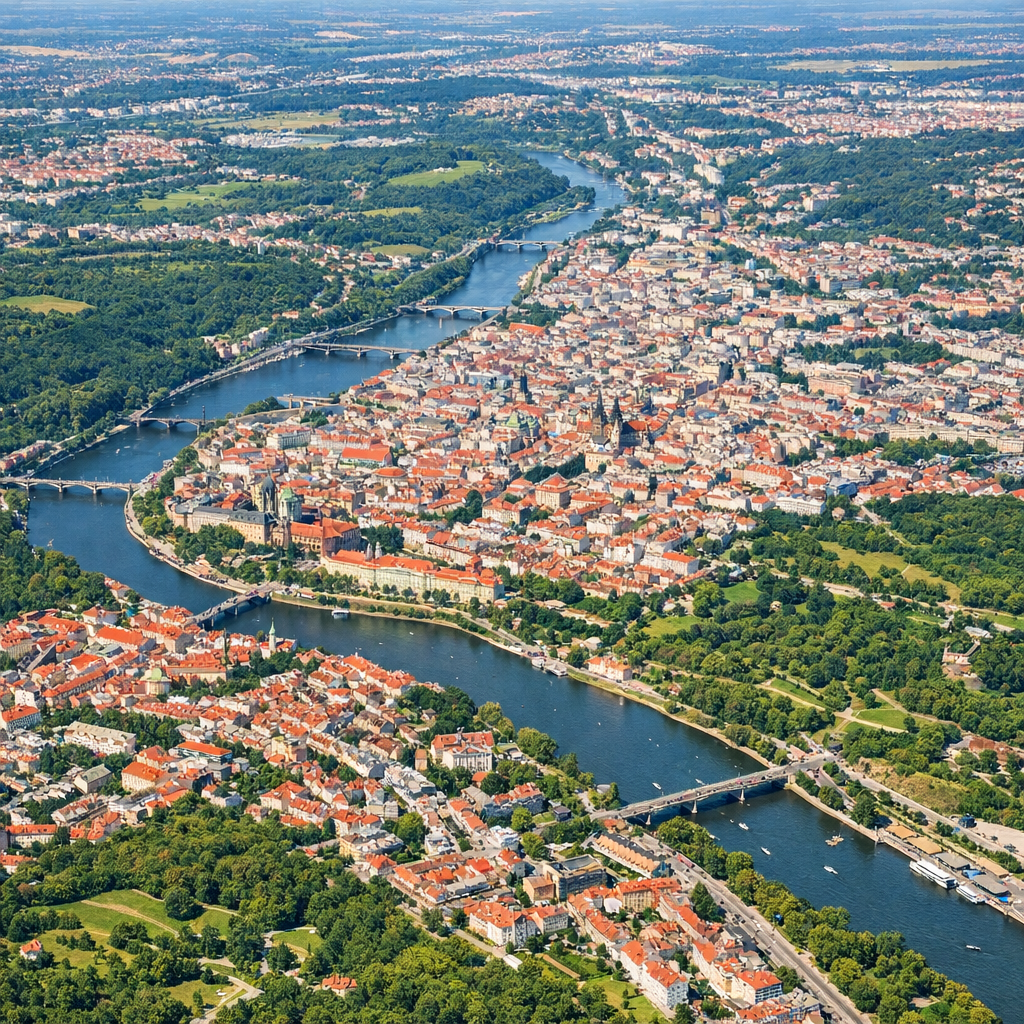
As global temperatures rise, urban areas like Prague are experiencing intensified heat due to the urban heat island (UHI) effect. This phenomenon occurs when city structures and surfaces absorb and retain heat, leading to higher temperatures compared to surrounding rural areas.
What is the Urban Heat Island Effect?
The UHI effect results from urbanization replacing natural landscapes with buildings, roads, and other infrastructure that absorb and re-emit heat. Factors contributing to this effect include:
- Surface Materials: Concrete and asphalt absorb more heat than natural surfaces.
- Reduced Vegetation: Less greenery means diminished cooling through evapotranspiration.
- Urban Geometry: Tall buildings and narrow streets can trap heat and reduce airflow.
- Waste Heat: Emissions from vehicles, air conditioning, and industrial activities add to urban warmth.
Impact on Prague
In Prague, the UHI effect has led to increased temperatures, more frequent heatwaves, and prolonged periods of heat. Climate models predict that these impacts will intensify in the future, with more pronounced fluctuations in rainfall and an increase in extreme weather events.
Mitigation Efforts
To combat the UHI effect, Prague has implemented several initiatives:
- Adaptation Fund Projects: In 2025, the city invested over 23 million crowns in projects addressing heat, drought, and heavy rainfall. These included tree planting, creation of flower meadows, courtyard revitalizations, pond renovations, and rainwater management measures.
- Climate Trees for Prague: This program tests heat- and drought-resistant tree species, with plans to plant up to 900 climate-adapted trees along the city’s streets.
- Cooling Oases Map: Development of a map highlighting locations with water, shade, and cooling features to help residents find relief during hot days.
Community Involvement
Residents can contribute to mitigating the UHI effect by:
- Planting trees and maintaining green spaces.
- Using reflective materials for roofs and pavements.
- Reducing energy consumption to lower waste heat.
- Supporting city initiatives aimed at enhancing urban greenery and sustainable infrastructure.
By understanding the urban heat island effect and participating in mitigation efforts, Prague’s community can help create a cooler, more sustainable urban environment.