

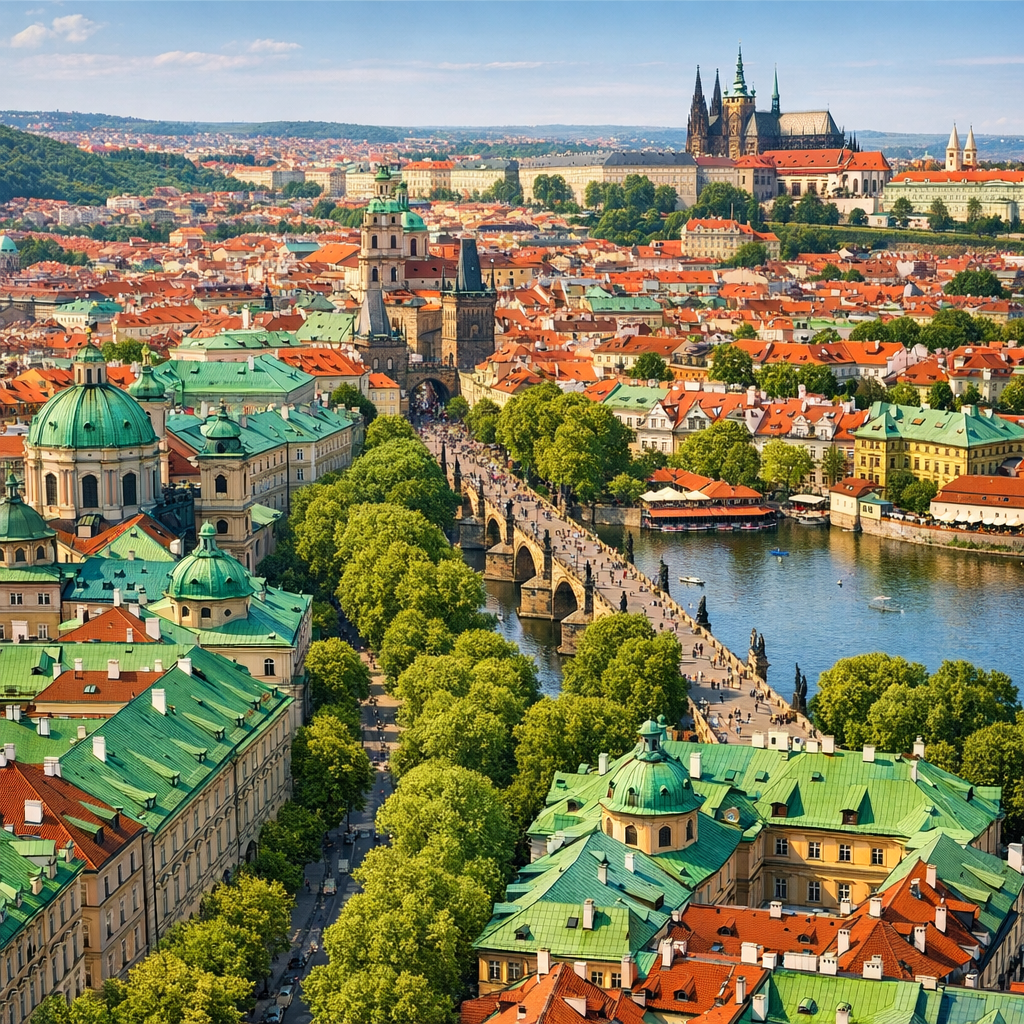
As Prague continues to grow and urbanize, the city faces the challenge of the urban heat island (UHI) effect, where urban areas experience higher temperatures than their rural surroundings. This phenomenon is primarily due to the extensive use of heat-absorbing materials like concrete and asphalt, reduced vegetation, and waste heat from human activities.
Understanding the Urban Heat Island Effect
The UHI effect results in urban areas being significantly warmer than nearby rural regions. Factors contributing to this include the thermal properties of building materials, limited green spaces, and heat generated by vehicles and industries. In Prague, this effect is intensified by the city’s dense architecture and limited vegetation in certain areas.
Impacts on Prague
Increased temperatures due to the UHI effect can lead to several issues:
- Elevated energy consumption for cooling buildings.
- Heightened health risks, especially for vulnerable populations during heatwaves.
- Decreased air and water quality.
- Altered local weather patterns, including increased frequency of heatwaves and changes in precipitation.
Strategies for Mitigation
To combat the UHI effect, Prague can implement several strategies:
Enhancing Urban Green Spaces
Increasing the number and size of parks, green roofs, and tree-lined streets can provide shade and promote evaporative cooling, effectively reducing urban temperatures.
Utilizing Reflective and Cool Materials
Incorporating materials with high reflectivity for roofs and pavements can decrease heat absorption, thereby lowering surface temperatures.
Implementing Sustainable Urban Planning
Designing urban areas with adequate ventilation corridors and integrating green infrastructure can facilitate air flow and reduce heat accumulation.
Promoting Energy Efficiency
Encouraging the use of energy-efficient appliances and systems can reduce waste heat emissions, contributing to a cooler urban environment.
Community Involvement
Residents can play a vital role by planting trees, creating green spaces, and adopting energy-saving practices. Community initiatives and awareness campaigns can foster a collective effort to mitigate the UHI effect.
By understanding and addressing the urban heat island effect, Prague can enhance the quality of life for its residents and move towards a more sustainable and resilient urban environment.