

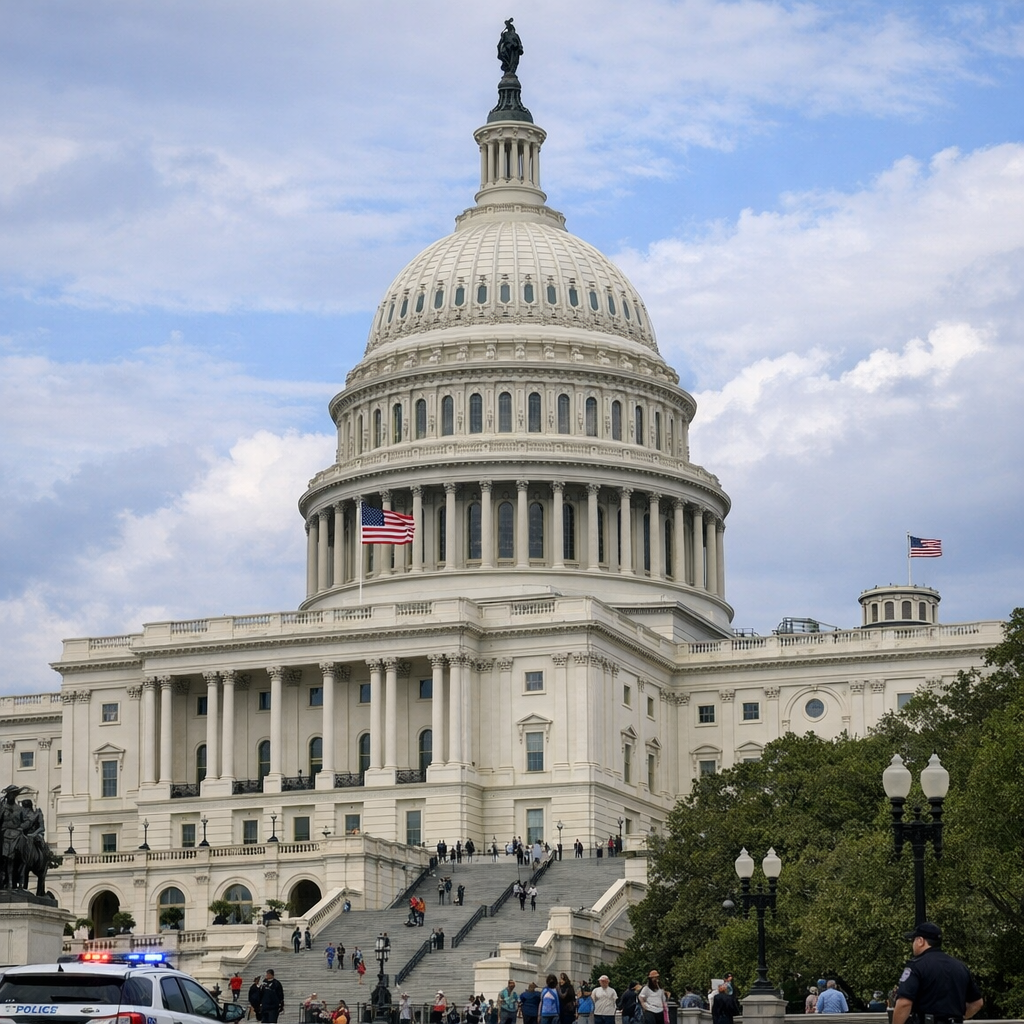
The United States operates under a federal system of government, dividing authority between the national government and individual states. This structure is designed to prevent any single entity from becoming too powerful.
Three Branches of Government
The U.S. government is divided into three branches:
Executive Branch
Headed by the President, the executive branch enforces laws and oversees the federal administration. The President also serves as the Commander-in-Chief of the armed forces and conducts foreign policy.
Legislative Branch
Known as Congress, this branch is bicameral, consisting of the Senate and the House of Representatives. The Senate comprises two senators from each state, totaling 100 members. The House of Representatives has 435 members, with representation based on state populations. Congress is responsible for creating laws, approving budgets, and declaring war.
Judicial Branch
Led by the Supreme Court, the judicial branch interprets laws and ensures they align with the Constitution. It has the authority to overturn laws or executive actions deemed unconstitutional.
Checks and Balances
The U.S. Constitution establishes a system of checks and balances to ensure no single branch becomes too powerful. For example, while Congress passes laws, the President can veto them; however, Congress can override a veto with a two-thirds majority. The Supreme Court can declare laws or executive actions unconstitutional, providing a check on both the legislative and executive branches.
Federalism
Federalism in the U.S. allocates certain powers to the national government while reserving others for the states. This division allows states to have their own governments, laws, and policies, provided they do not conflict with federal laws. This system accommodates the diverse needs and preferences of the country’s various regions.
Political Parties
The U.S. primarily operates under a two-party system, dominated by the Democratic and Republican parties. These parties influence policy decisions, electoral processes, and public discourse. While third parties exist, they have historically played a minor role in national politics.
Understanding the U.S. political system provides insight into how the country functions and makes decisions. This knowledge is valuable for comprehending current events and the nation’s role on the global stage.