

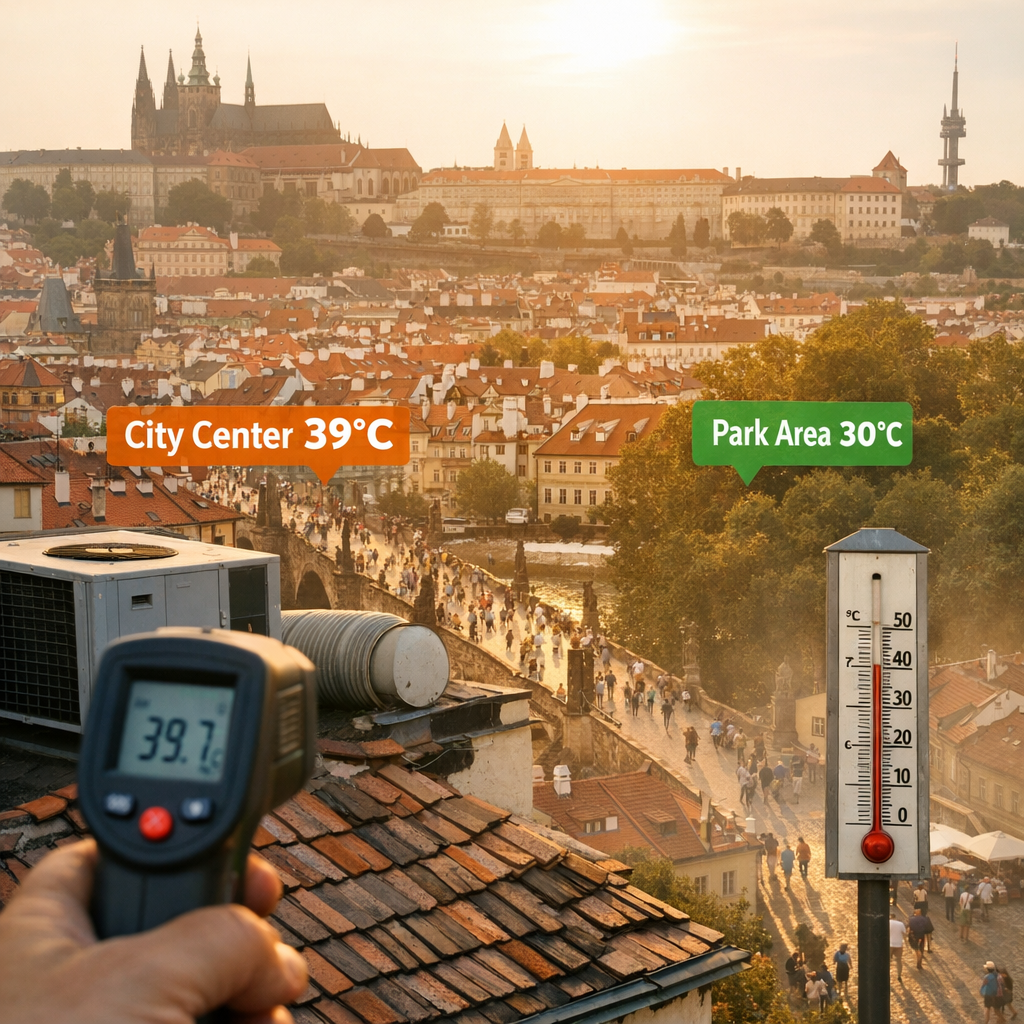
Prague, like many urban centers worldwide, experiences the urban heat island (UHI) effect—a phenomenon where city areas are significantly warmer than their rural surroundings. This temperature disparity arises from factors such as extensive concrete and asphalt surfaces, limited vegetation, and heat generated by human activities.
Understanding the Urban Heat Island Effect
The UHI effect results from urbanization replacing natural landscapes with materials that absorb and retain heat. Buildings, roads, and other infrastructure absorb solar radiation during the day and release it at night, leading to higher temperatures in urban areas compared to rural ones. This effect is more pronounced during calm, clear nights and can exacerbate heatwaves, impacting public health and energy consumption.
Prague’s Climate Trends
Historical data indicates a significant warming trend in Prague. Between 1776 and 2025, the city’s average temperature increased by approximately 2.9°C. This warming trend aligns with global patterns and underscores the need for targeted urban planning and climate adaptation strategies.
Mitigation Efforts in Prague
Recognizing the challenges posed by the UHI effect, Prague has proactively invested in climate adaptation measures. In 2025 alone, the city allocated over 23 million crowns to projects addressing heat, drought, and heavy rainfall. Since the inception of its Adaptation Fund, more than 570 million crowns have been dedicated to hundreds of initiatives aimed at enhancing the city’s resilience to climate change.
Key strategies include:
- Enhancing Green Spaces: Increasing urban greenery through parks, green roofs, and tree-lined streets to provide shade and promote evaporative cooling.
- Implementing Sustainable Urban Design: Utilizing materials with higher reflectivity for pavements and buildings to reduce heat absorption.
- Improving Water Management: Developing systems to manage stormwater effectively, reducing surface temperatures and mitigating flood risks.
Community Involvement
Residents can contribute to mitigating the UHI effect by:
- Planting trees and maintaining gardens to increase vegetation cover.
- Using reflective materials for roofing and paving to reduce heat absorption.
- Participating in community initiatives focused on sustainable urban development.
By understanding the urban heat island effect and actively participating in mitigation efforts, Prague’s residents and policymakers can work together to create a cooler, more sustainable urban environment.